PROJECT DETAILS
Legacy Production System Integration and Data Normalization Platform
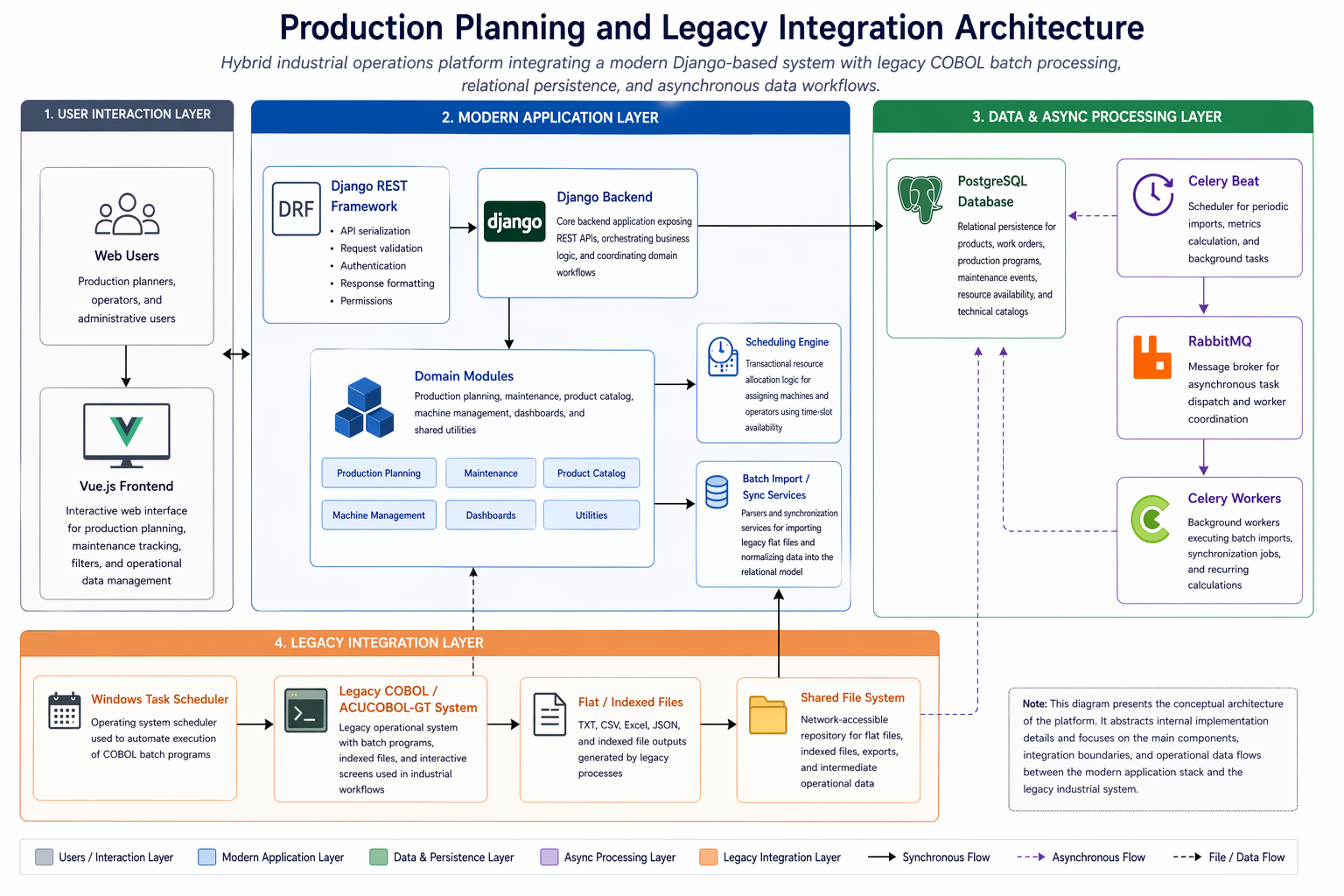
Functional prototype (six months) that connected the COBOL-based ERP of an industrial manufacturer with a relational data model, without modifying the legacy system.
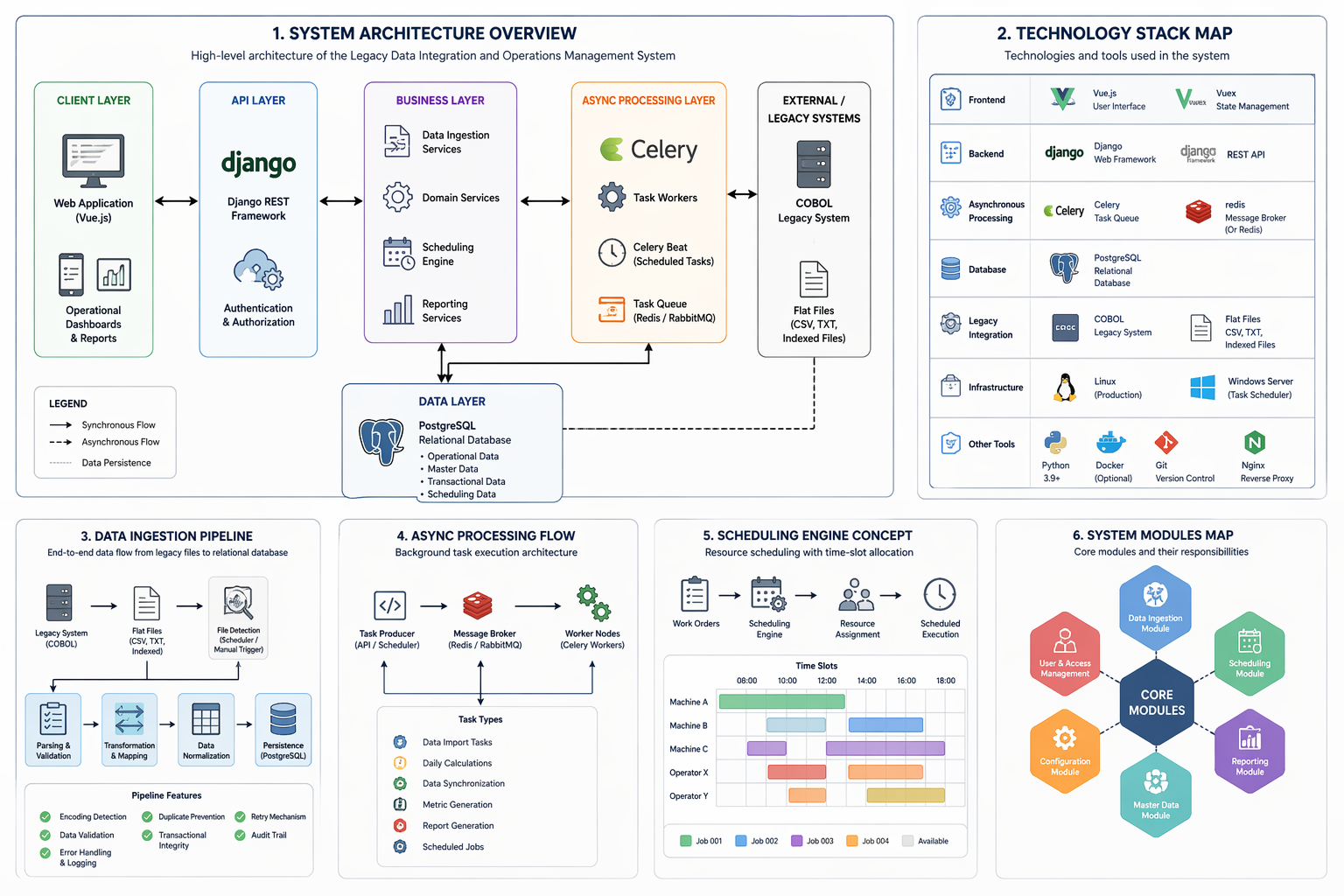
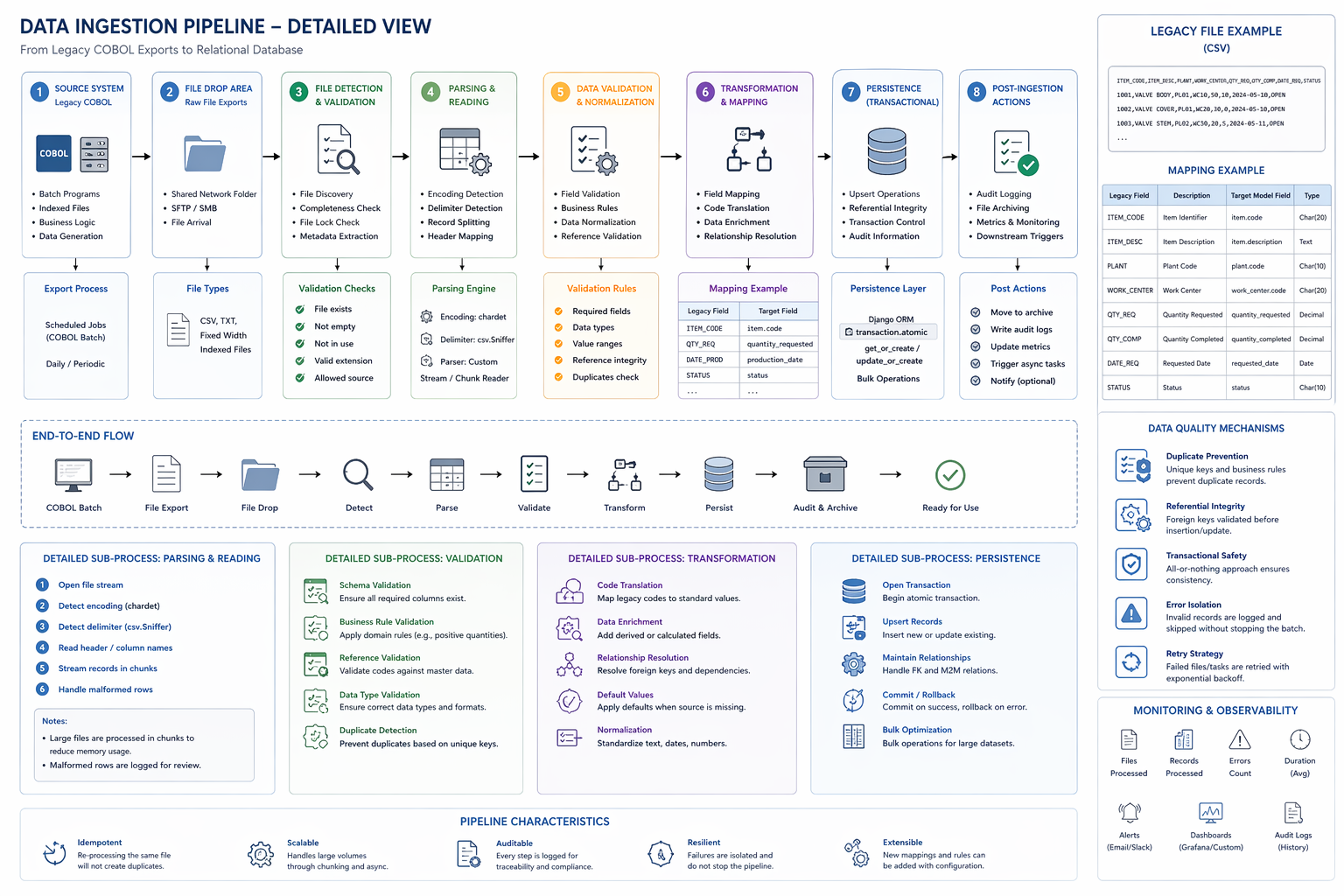
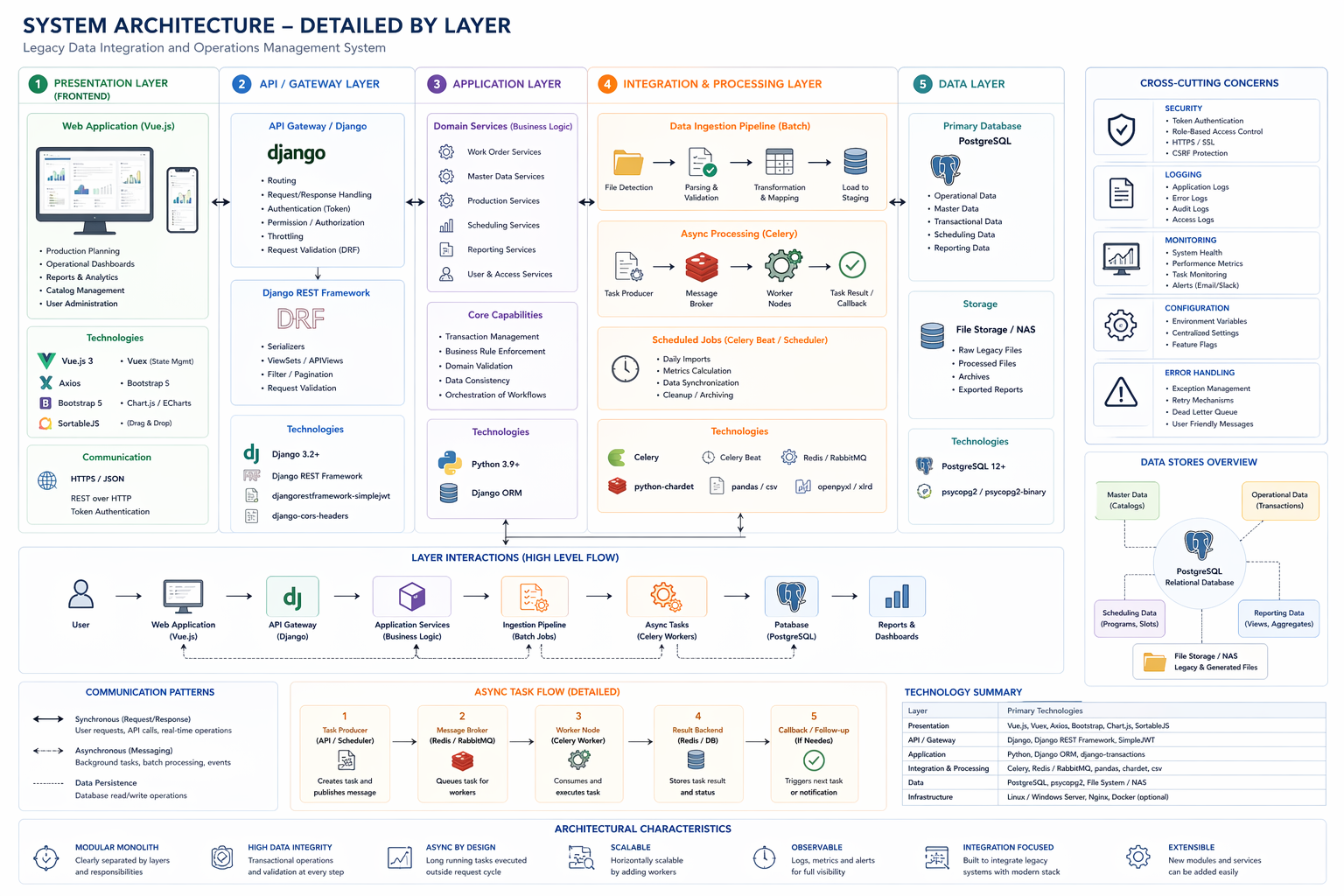
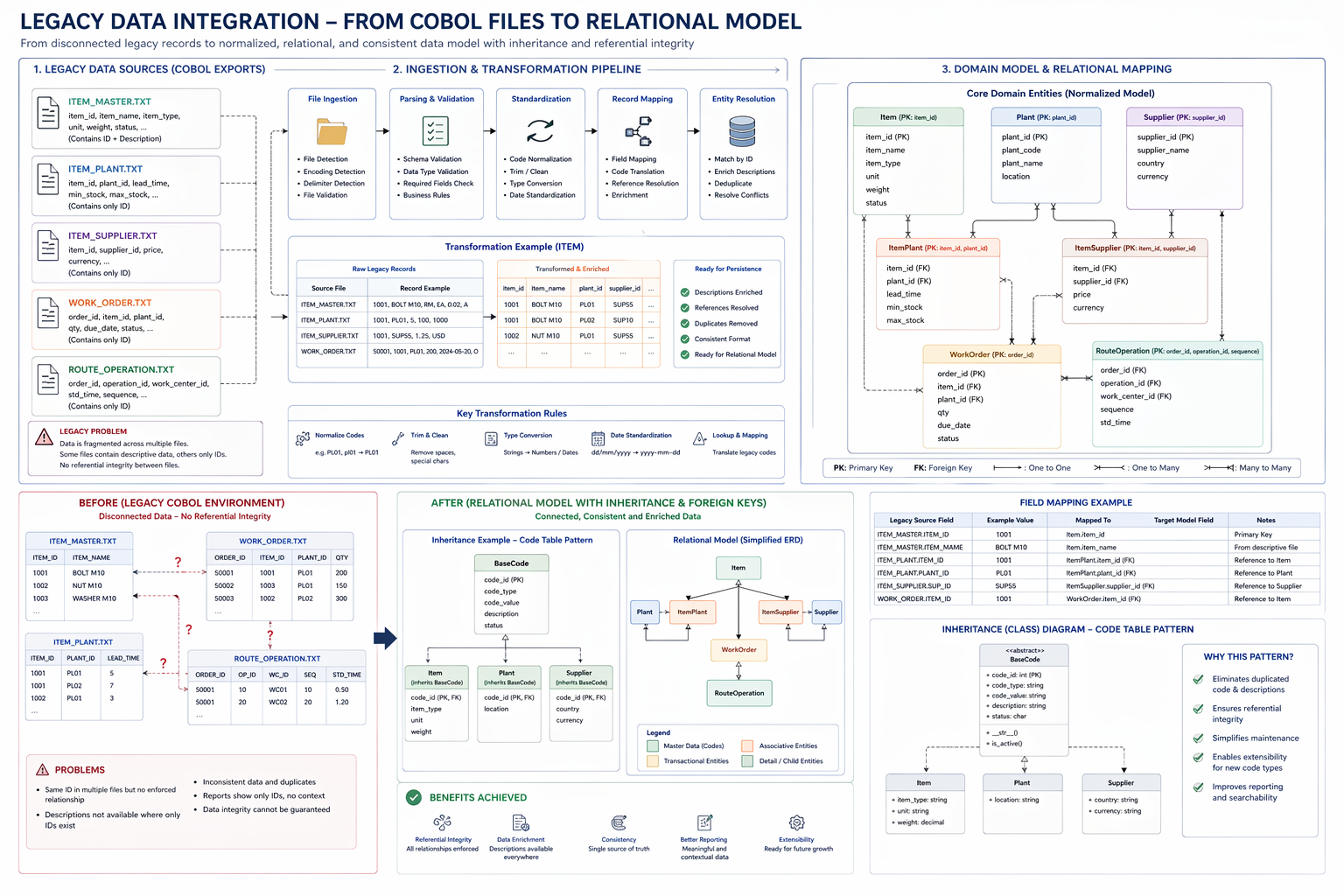
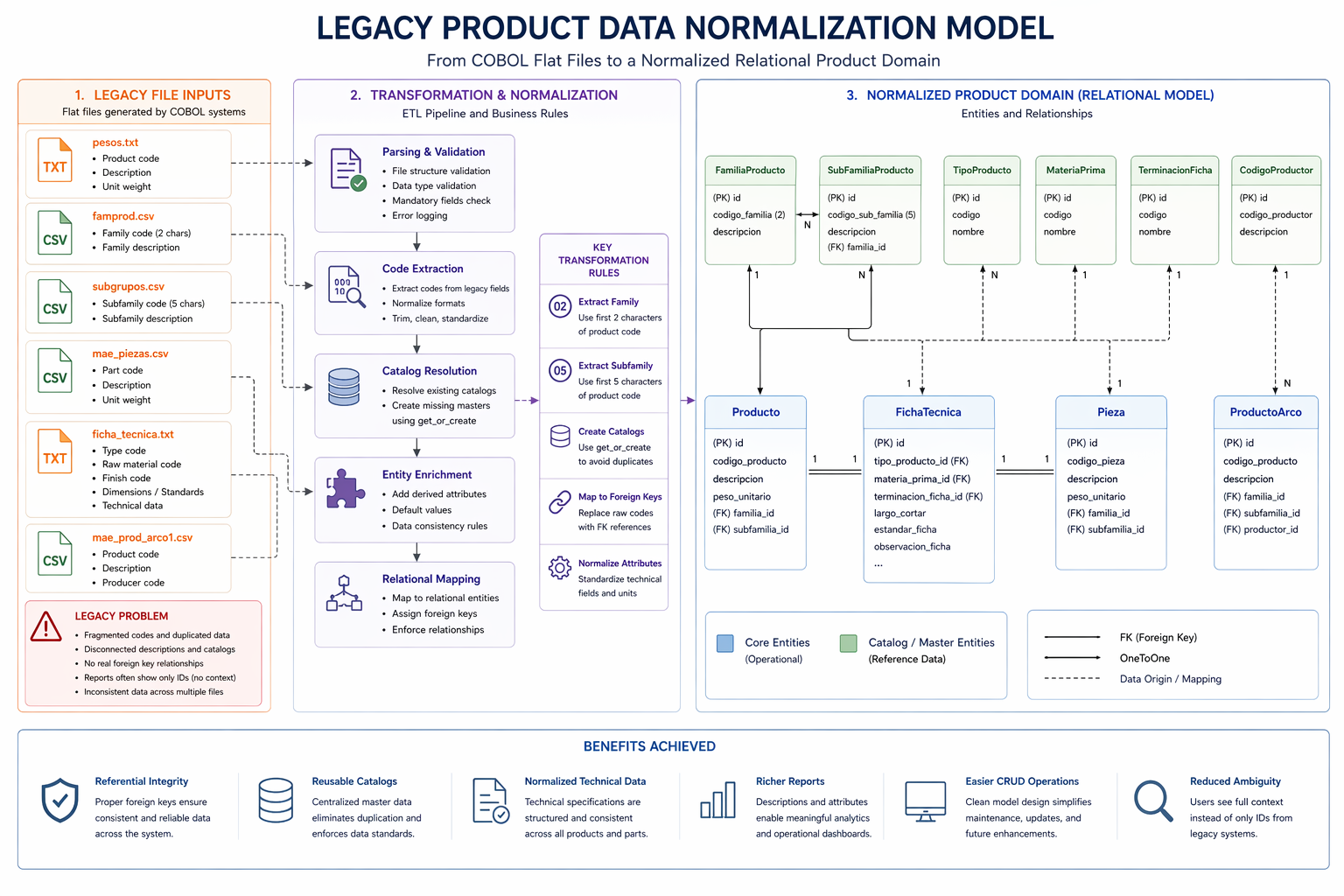
The ERP exported operational data through scheduled batch jobs as flat and indexed files on a shared network location: products, technical specifications, production operations and master data, with no consistent referential relationships between them. The prototype ingested those files on a schedule (Celery workers coordinated through a message broker), validated their structure, normalized field formats and mapped legacy identifiers onto a PostgreSQL model through the Django ORM. Record creation was idempotent, so re-running an import did not duplicate rows, and every import was logged for traceability.
The result was a navigable relational model across products, components, technical sheets and catalogs, exposed through a REST API. Attributes that the legacy system stored as free text were progressively moved into structured catalogs.
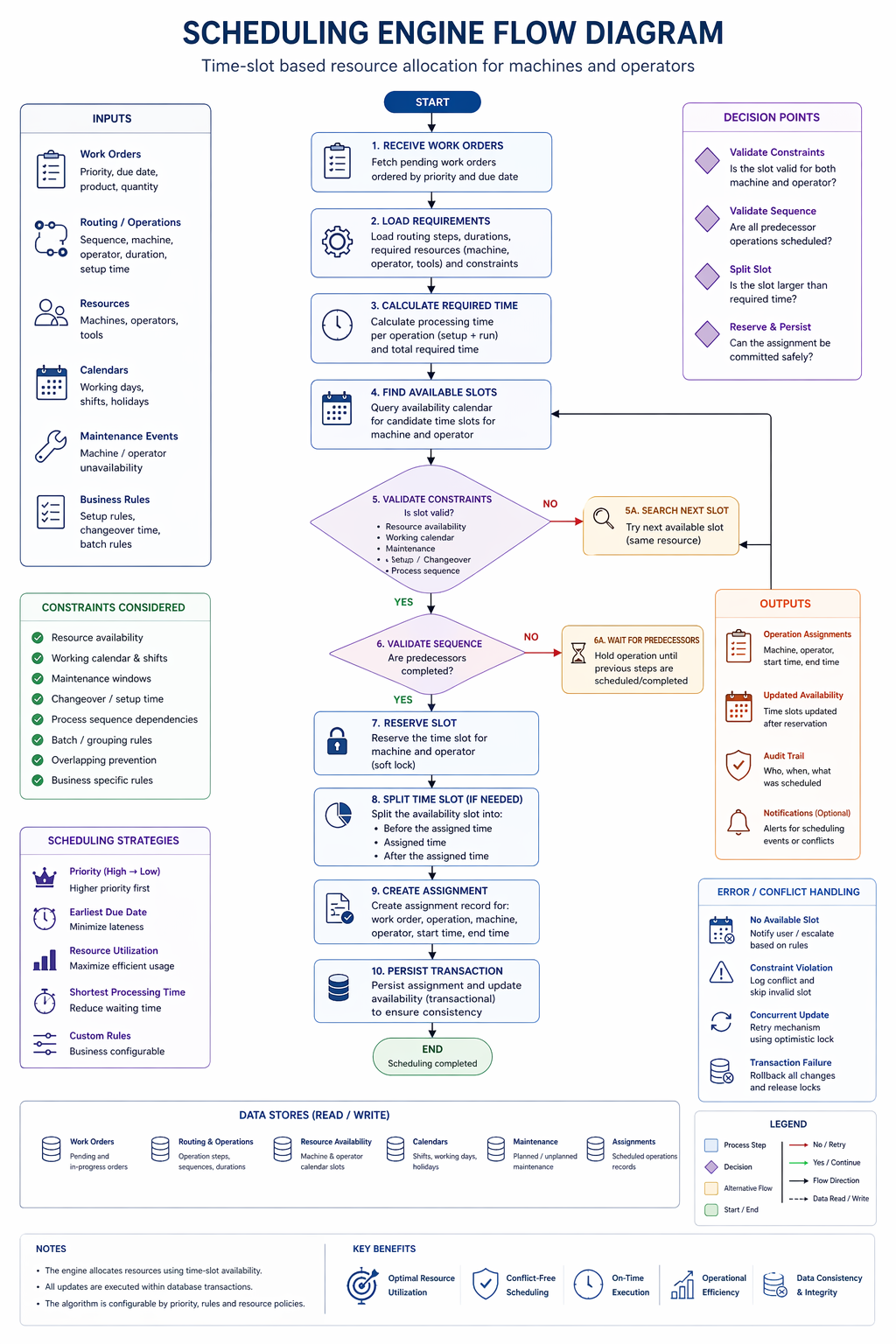
Scope and limits: the legacy system remained the system of record and was not changed. Production scheduling and maintenance modules were explored at the design stage only. Production adoption and user scale were not measured; the deliverable was a working prototype and its documentation.
Framework: Python / Django / VUE

Technology Stack:
Python, Django | Django REST Framework | PostgreSQL | Celery | RabbitMQ | Redis | CSV Processing | ETL Pipelines | ACUCOBOL-GT | Windows Task Scheduler | REST API | Data Normalization | Transaction Management | Background Jobs | File-Based Integration
About Team
Company / Institution: Industrial Manufacturing Company (Confidential)
Developer: Marco Antonio Parra F Single developer responsible for backend architecture, data modelling, legacy-file ingestion, ETL pipeline development and schema evolution. Delivered as a working prototype, not a production deployment.
The repository documents the problem, architecture and results of this case study. Source code is not published (confidential, anonymized professional work).
Project Images